Podcast

October 1, 2026
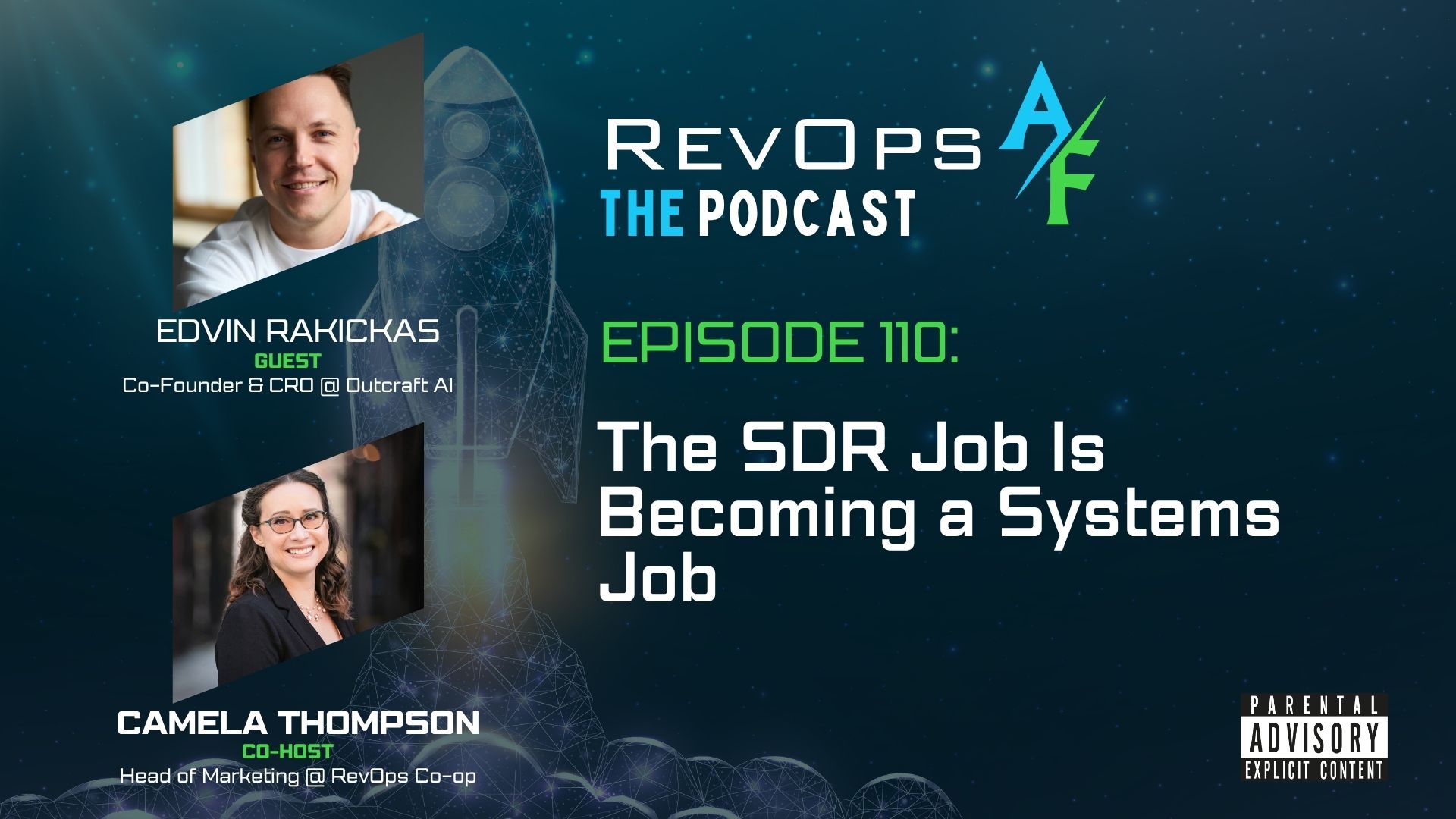
Episode 110: The SDR Job Is Becoming a Systems Job
AI is reshaping the SDR role from activity-based to systems-based. Outcraft AI co-founder Edvin Rakickas on what actually breaks in AI outbound.


Every RevOps professional knows the struggle: you see exactly what needs to be done to fix broken processes, align departments, and drive revenue growth, but you lack the formal authority to make it happen. You're stuck taking requests instead of driving strategy, watching opportunities slip by while stakeholders resist change.
James Warren, Senior Manager of Technology at the Chief of Staff Association, has cracked this code—not once, but three times. In this episode of RevOpsAF, he shares the proven playbook that helped him build RevOps departments from the ground up, transforming from a "data management" role into the strategic driver of organizational change.
Warren's success didn't happen in isolation. It started with identifying the right ally—someone with senior-level access who could champion the vision from above while Warren built credibility from below.
"It was a really powerful relationship actually, that partnership working together, and that's what's driving what I'm doing now as well. And I've done this three times over probably since that. It works for me. So hopefully it's useful for everyone else." — James Warren
This partnership model is crucial for RevOps professionals looking to expand their influence. Without executive air cover, even the best ideas can get shot down before they gain traction.
Before engaging with stakeholders, Warren and his manager would sit down privately to envision what the organization could become. This wasn't about creating a detailed project plan—it was about understanding the full potential of their systems and processes.
"One of the first things we did was just sit down and map where this could be, what could we actually do with the system?" — James Warren
This private visioning session became the north star for all subsequent conversations, similar to the strategic planning approaches outlined in our guide to building marketing budgets.
Here's where most RevOps professionals go wrong: they come in guns blazing with solutions. Warren took the opposite approach.
"The key thing was just to listen. Listen to everyone and provide no ideas on day one." — James Warren
This listening-first approach serves multiple purposes. It helps you understand what makes the business tick, identifies the "special sauce" that customers value, and builds trust with stakeholders who feel heard rather than lectured to.
"You have to act like a sponge and look at the art of the possible and just learn as much as you can about what's really getting in the way." — Camela Thompson
This mirrors the customer-centric approach we see in successful customer onboarding strategies, where understanding before prescribing leads to better outcomes.
Warren implemented an agile scrum approach to stakeholder management, meeting with department heads every two weeks to tackle quick wins and build credibility. This wasn't just about project management—it was about creating a rhythm of success that stakeholders could count on.
"I like to operate in an agile scrum way. You time box your period of time that you're going to work in. So every two weeks, and then you would look at all the tasks you want to get done in those two weeks." — James Warren
These regular touchpoints allowed him to address immediate pain points—helping a struggling rep avoid a performance improvement plan, generating a crucial report for a department head, or solving a data visibility issue. Each small win built toward the larger RevOps transformation, much like the systematic approach needed for fixing tech bloat problems.
One of Warren's most effective tactics was creating internal newsletters for stakeholders. These weren't just status updates—they were strategic communication tools that created alignment and managed expectations.
"By offering out this newsletter to people, it sets the boundaries for unrealistic expectations as well to say, ‘Oh, we're going to change this process. Senior leadership wants to change this process for the next quarter.’ They can see because they're receiving an email every two weeks that the data's just not there yet." — James Warren
This communication strategy serves multiple functions:
The newsletter approach aligns with best practices we see in sales forecasting accuracy, where regular communication and expectation management are crucial for success.
Warren's "lunch and learn" sessions weren't traditional training—they were strategic showcases of what technology could accomplish. Instead of teaching people how to create deals in the CRM, he focused on exciting use cases that got people thinking differently.
"We are going to go and build this business from the ground up. We're going to build a website, we're going to build a sales process, a marketing plan. We're going to make sure we deal with GDPR issues and data protection." — James Warren
These sessions served as proof-of-concept demonstrations, showing stakeholders what was possible with their existing tools. The key was making it fun and hypothetical while demonstrating real capabilities, similar to how digital sales rooms can transform the buyer experience when properly implemented.
Perhaps Warren's most sophisticated tactic was what he calls the "inception" approach—planting ideas in stakeholders' minds so they think the ideas are their own.
"In doing it this way round when the RevOps is not from the top downwards, you cannot be precious about the idea. The idea might be yours but you. What you want to do is actually make sure it gets built. So if you can like inception, put the idea in to other people. As long as you get to actually build it, then that's the goal, and then we're winning." — James Warren
This approach requires ego management but delivers superior results. When stakeholders feel ownership of ideas, they become champions rather than resistors. It's a principle that applies across RevOps functions, from implementing mutual action plans to driving adoption of new processes.
Warren knew he'd succeeded when the dynamic flipped: instead of pushing for change, stakeholders were coming to him with requests and budget discussions.
"At some point it feels like it flips round where it no longer feels like we are trying to change the status quo from the bottom, and then we've become the status. The way that we now work has become the status quo." — James Warren
This tipping point typically coincided with budget planning cycles, when departments competed for resources and looked to RevOps for guidance on what was possible and in what order. It's similar to the maturity progression we see in account-based marketing implementations, where initial resistance gives way to enthusiastic adoption.
Warren's final piece of advice centers on time allocation: 70% on immediate needs, 20% on medium-term projects, and 10% on long-term strategic initiatives.
"If you don't give that time and give it to yourself and say, I will work on something that changes something in the future. I don't think you'll ever get anywhere with RevOps because you do need to be a few steps ahead of where this business is going to go in the next kind of couple of years." — James Warren
This time allocation ensures you're not just reactive but actively shaping the organization's future. It's the difference between being a service function and being a strategic driver, much like the evolution we see in how operations functions fit into RevOps.
Building influence without authority isn't about manipulation—it's about creating genuine value while strategically positioning yourself as indispensable to the organization's success. As Warren demonstrates, the right approach can transform you from a order-taker to a strategic driver, regardless of your title or formal authority.
For RevOps professionals feeling stuck in reactive mode, Warren's playbook offers a clear path forward. The key is patience, consistency, and always keeping the organization's success at the center of your efforts.
Check out our blog, join our community and subscribe to our YouTube Channel for more insights.