Podcast

September 11, 2026
Episode 107: AI Can't Fix What Your Business Can't Define
97% of companies have AI initiatives. Only 5% have data ready to support them. Katie Brown on what "AI ready" actually means for RevOps.


Ever inherited a CRM that looks like it survived a natural disaster? Or been told that a "quick picklist update" would only take five minutes — right before it broke three integrations and a marketing automation sync? If any of that sounds familiar, this episode is for you.
In this episode of the RevOpsAF Podcast, co-host Camela Thompson, Head of Marketing at RevOps Co-op, is joined by Lance Thompson, Technical Sales Operations at SeekOut, and, as it happens, her husband of many years and fellow RevOps veteran. Together, they ditch the formal interview format in favor of something far more cathartic: an unfiltered rant session covering the most ridiculous, relatable, and painfully real situations that RevOps professionals encounter on a daily basis. Between them, they bring over three decades of combined experience in revenue operations, and it shows.
Every RevOps practitioner has experienced the particular frustration of building a clean, logical process; only to watch a user find the one path through the system that you never anticipated. Lance opens the rant session with a scenario that will resonate with anyone who has ever managed a CRM: a rep who, instead of creating a new expansion opportunity, simply hijacks an existing renewal opportunity and repurposes it. The renewal disappears from the forecast, chaos ensues, and somewhere a RevOps person is staring at their screen wondering how this was even possible.
"You set up all these perfect processes and say, okay, they're gonna follow this path and then this will happen. And then you always get people throwing curveballs and doing things you don't expect." — Lance Thompson
Camela adds her own version of this phenomenon: building a Salesforce Lightning page layout, watching a user during a screen share, and discovering they've clicked on something she didn't even know was clickable. The instinct is to dismiss it as a one-off, but the more experienced move is to ask the harder question: if one person did this, how many others are doing it silently? This is the kind of thinking that separates reactive admins from proactive RevOps operators.
The downstream consequence of these curveballs is often a validation rule... sometimes written with a very specific person in mind. As Lance puts it, there have been moments where the temptation to name the offender directly in the error message was almost irresistible. It's funny, but it also points to a real challenge: process management in RevOps is as much about human behavior as it is about system configuration. You can build the most elegant workflow in the world, and someone will find a way around it.
If there is one phrase that unites RevOps professionals across industries, company sizes, and tech stacks, it is this: "This should only take you five minutes." Camela names it as one of her most-loathed phrases in the profession, and for good reason.

The scenario plays out like this: someone, often a well-meaning colleague or a manager who has never been on the admin side of a CRM, decides that updating a picklist value is a trivial task. What they don't see is the web of flows, automation rules, field dependencies, and cross-system syncs that are tied to that single field. Change the value, and suddenly your marketing automation tool stops syncing. Records get misrouted. Reports break. And the person who made the change is genuinely baffled by the fallout.
"That should just take you five minutes. It's just a picklist update. Do you know how many workflows and things this thing is tied to? IT NEVER TAKES 5 MINUTES." — Camela Thompson
Lance extends the point: it's not just the picklist itself that needs updating. It's every record in every connected system that now has an outdated value. The ripple effects are real, and they take time to untangle. This is precisely why understanding how Sales, Marketing, and CS operations fit together is so critical. A change in one system rarely stays contained to that system.
The related rant: well-meaning colleagues with admin access who "help" while you're out for a day. Lance describes the scenario with the weary familiarity of someone who has lived it: you come back to find that someone has helpfully updated picklist values on a field... and is now wondering why the marketing automation tool has stopped syncing entirely. The answer, of course, is that their admin access has since been revoked. Lesson learned.
"My motto is to trust until proven otherwise. But once the proof is there, the admin access goes away." — Camela Thompson
It's easy to blame users for system chaos, but as Lance points out, sometimes the culprit is the tooling itself. Data enrichment tools are a prime example. In theory, they're invaluable: they fill in missing information, keep records current, and reduce manual data entry. In practice, they can create a category of problems that Camela describes as a "zombie account" or a record that is half the company the person actually works for, enriched with data from a completely different company of a different size, in a different location, now routing to the wrong sales rep.
Camela's solution is a layered logic approach: enrichment fields sit alongside "last updated" core fields, with time-based logic that prioritizes recent user-submitted data over enrichment data within a defined window (30 to 60 days). It works, but she's the first to acknowledge that the mental overhead required to maintain it is significant. As she puts it, her head is constantly running the A Beautiful Mind equation: mapping out every possible data conflict and building rules to handle each one.

This kind of data management complexity is one of the most underappreciated challenges in RevOps. It's invisible to most stakeholders, it's difficult to explain, and it requires constant maintenance. But get it wrong, and leads route to the wrong reps, accounts get duplicated, and the entire go-to-market motion suffers.
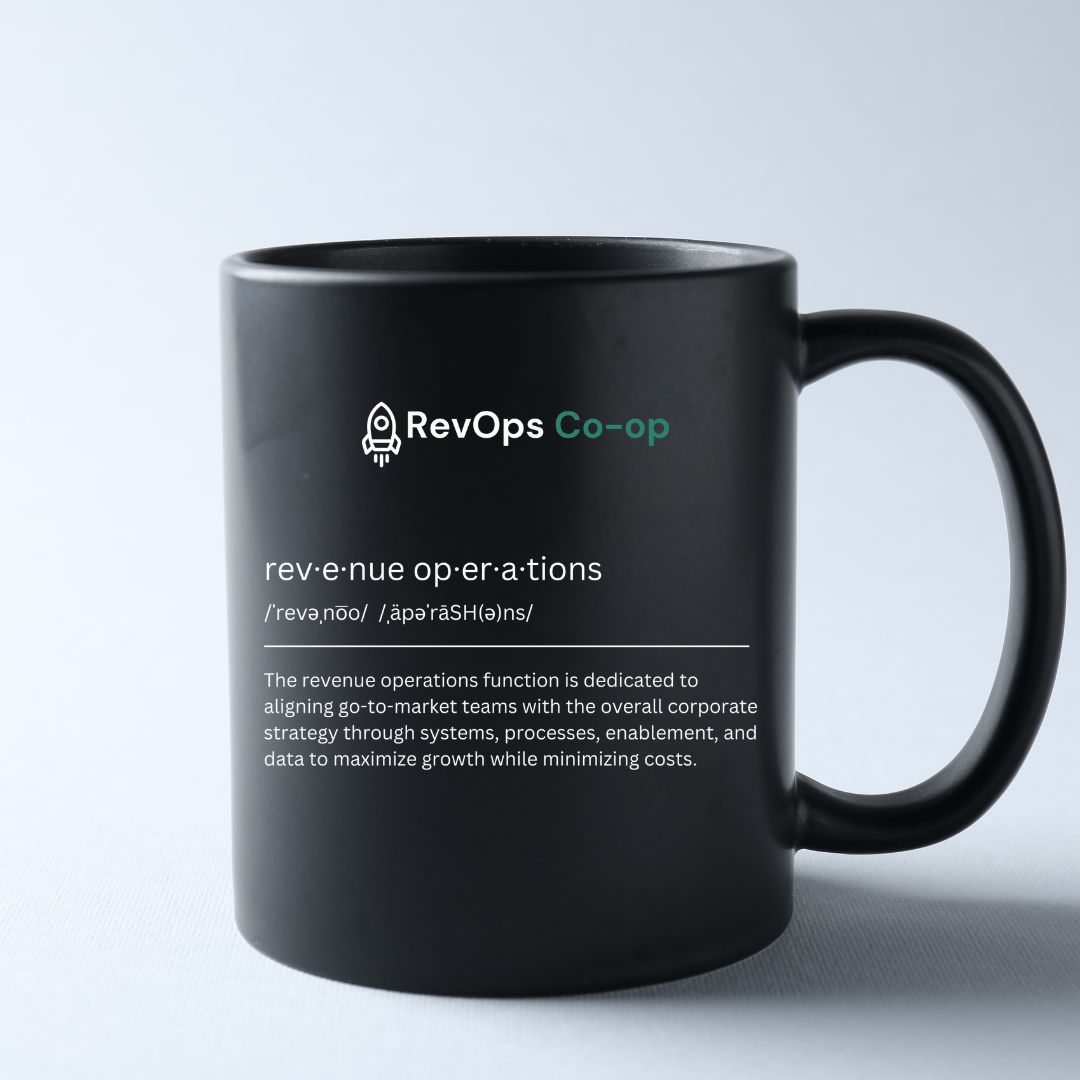
Camela raises a rant that will feel uncomfortably familiar to anyone who has worked in a RevOps leadership role: the experience of explaining what revenue operations actually is to the executive team: repeatedly, monthly, sometimes more often. She keeps a dedicated slide at the front of every deck for exactly this purpose.
The irony is not lost on her. She co-hosts a podcast called RevOpsAF. She works at the RevOps Co-op. And yet, she is still regularly in rooms where she has to start from first principles. Lance's observation cuts to the heart of it: you have to explain it differently to each person, because each executive has a different frame of reference and a different set of concerns.
This challenge is well-documented in the broader RevOps community. As explored in the Revenue Operations vs. Sales Operations breakdown on the RevOps Co-op blog, the function is still relatively new and its scope varies enormously from company to company. When the definition of RevOps is genuinely contested, even among practitioners. It's no surprise that executives need regular re-education. The solution Camela lands on is the same one she gives everyone else: communicate proactively, regularly, and in the language your audience actually uses.
For a deeper look at how the RevOps identity question plays out at the organizational level and in the job market, Episode 80: The RevOps Identity Crisis is essential listening.
One of the most substantive rants in the episode centers on reporting. Specifically, the gap between what marketers want to report on and what executives actually want to know. Camela is direct about this, even at the risk of frustrating marketers: CEOs generally want to know a small number of things. How many qualified leads came in? How many deals came out of that? How much pipeline? How much revenue? And they typically think about it in terms of last-touch attribution or what happened right before the deal was created.
This drives marketers up the wall, because marketing touches every deal across an eight-month buying cycle. Last-touch attribution dramatically undersells marketing's contribution. But the answer isn't to bury executives in multi-touch attribution models and click-through rate dashboards. The answer is to find a way to give executives the simple view they need while also advocating for a more complete picture over time.
As Camela puts it, getting marketing to focus on what executives care about — rather than vanity metrics like ad click-through rates — is genuinely hard. Lance's response is characteristically pragmatic: at least they're looking at some data. The bar, apparently, is not always high.
This tension between granular marketing metrics and executive-level business outcomes is one of the core challenges in aligning revenue teams around shared KPIs. The RevOps function exists precisely to bridge that gap: to translate the complexity of the full funnel into the language of business results. For a practical framework on how to do this, the RevOps Co-op's video series on aggressive revenue targets with flat headcount offers concrete strategies for operating in exactly this kind of environment.
For RevOps practitioners at smaller companies, the episode surfaces a challenge that is both universal and uniquely painful: scope creep. When you're the only operations person in the building, and you happen to know how to do something, the path of least resistance is to just do it. Camela describes this pattern with self-aware humor: she ended up managing the entire backend of the company website, handling 404 redirects, and editing the robots.txt file. Not because it was in her job description, but because she knew how, and it needed to be done.
The result is a job description that expands faster than any single person can sustainably manage. And the worst part? It's often self-inflicted. The same competence that makes a RevOps practitioner valuable makes them a target for every task that doesn't have a clear owner.
This is a well-known hazard of the solo RevOps role, and it connects directly to the broader challenge of setting expectations when walking into a broken GTM organization. Camela's advice is hard-won: if you walk into a company where everything is broken and they're expecting you to fix it all immediately, build a roadmap, set explicit timelines, and communicate proactively about what's realistic. If you encounter resistance from any team along the way, be transparent about how that affects the timeline. The pedestal you get put on when you first arrive will not survive the first missed expectation, so manage those expectations before they manage you.
For more on how RevOps practitioners can navigate the complexity of being a team of one, Thriving as a Team of One in RevOps explores the foundational data challenges that make every other RevOps initiative harder than it needs to be.
One of the most generous and insightful moments in the episode comes when Camela steps back from the rants to acknowledge something important: sales has the hardest job in the building. Marketing gets thrown under the bus when the organization is struggling. Sales is held accountable for numbers that depend on a dozen variables outside their control. And when they complain about the systems and processes they're working with, they're usually onto something real, even if they're not always diagnosing the root cause correctly.
Lance makes the point that RevOps exists, in large part, to eliminate the friction that makes everyone's job harder. If the RevOps team thinks a process is dumb, the sales team definitely thinks it's dumb, and it's probably demotivating them. The goal is to automate the repetitive, remove the unnecessary, and preserve the judgment calls for the humans who are best positioned to make them.
Camela shared a cautionary tale from a previous role: an organization that had accumulated 20 validation rules on the opportunity object. The rules were so numerous and so conflicting that reps effectively couldn't use the opportunity object anymore. It's a perfect illustration of what happens when process management becomes an end in itself rather than a means to better outcomes. The RevOps Co-op webinar on SDR metrics and outbound performance covers similar territory: how over-engineered processes and the wrong metrics can quietly kill a go-to-market motion.
"If we think the work is dumb, then I know they think the work is dumb as well. And if it becomes demotivating, the less extra stuff you have to do — we should do everything we can do to take that away." — Lance Thompson
The flip side of this, of course, is that systems can't read minds. They can't do data entry for reps. AI is getting closer — Lance mentions some interesting work being done with Gong at SeekOut — but the fundamental principle holds: RevOps can reduce friction, but it can't eliminate the need for human input entirely.
In a lighter moment, Camela shares what might be the most effective (and slightly devious) tactic for getting salespeople to do proactive outreach: announce that territories are about to change. Suddenly, reps who haven't touched their pipeline in months are furiously opening opportunities and reaching out to accounts they've been sitting on. The pipeline comes alive.

Her tongue-in-cheek suggestion: announce it quarterly and never actually do it. They'll get used to it eventually, so you'll have to follow through occasionally, but as a forcing function for pipeline hygiene, it's remarkably effective. (She was kidding. We promise.)
This behavioral dimension of RevOps, understanding the incentives and habits that drive user behavior, and designing systems that work with those tendencies rather than against them, is one of the most underrated skills in the profession. For more on how to think about the human side of revenue operations, Episode 76: The Movable Middle explores how understanding rep behavior can unlock significant revenue upside.
What makes this episode valuable isn't just the humor, though there's plenty of it. It's the honesty. Two experienced RevOps practitioners, speaking without the filter of a formal interview, surface the real texture of the work: the frustration of building systems that humans immediately find ways around, the invisible complexity that makes "simple" requests anything but, and the ongoing challenge of communicating the value of operations to people who have never had to think about it.
RevOps is, at its core, a function that exists to make everyone else's job easier. That's a noble mission. It's also one that requires constant negotiation between what's technically possible, what's organizationally feasible, and what people will actually do when left to their own devices. The rants in this episode aren't complaints. They're field notes from the front lines of that negotiation.
"RevOps is so fun. Why did we do this? Why do we do it? Because it's not sales. That's the hardest job there is." — Camela Thompson
Fair enough.
Check out our blog, join our community and subscribe to our YouTube Channel for more insights.
Our average member has more than 5 years of RevOps experience. That means you’ll have real-time access to seasoned professionals. All we ask is that you’re generous with your knowledge in return.