



If you’re early in your RevOps career or stepping into a new consulting engagement, the fastest way to understand how a company actually operates isn’t buried in a CRM schema or a dashboard library.
It’s in how teams report their performance.
A good first step at a new company is to compare how Marketing, Sales, and Customer Success talk about results versus how the executive team talks about the business. The gaps between those stories tell you almost everything you need to know about alignment, trust, and where RevOps is about to earn its keep.
Some misalignment is normal and healthy. A demand gen manager needs far more detail about campaign performance than a CRO ever will. But when department leaders aren’t reporting on what the C-suite actually cares about, they’re not just being detailed. They’re operating in a bubble.
Strong go-to-market KPIs do three things well:
When those things aren’t true, RevOps becomes reactive instead of proactively spotting issues and helping the business correct them.
Misalignment doesn’t usually show up as a dramatic argument over definitions. Although we’ve all lived through the “what is an MQL?” meeting that somehow eats an entire afternoon.
More often, it shows up as quiet distrust.
Sales thinks Marketing’s numbers are inflated. Marketing thinks Sales ignores perfectly good leads. AEs roll their eyes every time the CMO talks about a new website while they’re out there self-sourcing pipeline at 10 PM.
If you want to surface real misalignment, the most revealing conversations aren’t about dashboards. They’re about belief. Ask questions like:
When people hesitate, or answer those questions very differently, you’ve found a KPI problem. Metrics can’t fix everything, but they’re excellent at exposing where teams are optimizing for their own success instead of the company’s.
That’s where RevOps steps in: not to pick sides, but to create a shared language.
Before you change a single KPI, you need a customer journey map everyone can agree on. Otherwise, you’re just rearranging definitions.
A common—and effective—starting point is the Bow-Tie revenue model popularized by Winning By Design. The value of the Bow-Tie isn’t the labels themselves; it’s that it forces teams to see revenue as a continuous customer lifecycle, not a series of departmental handoffs.
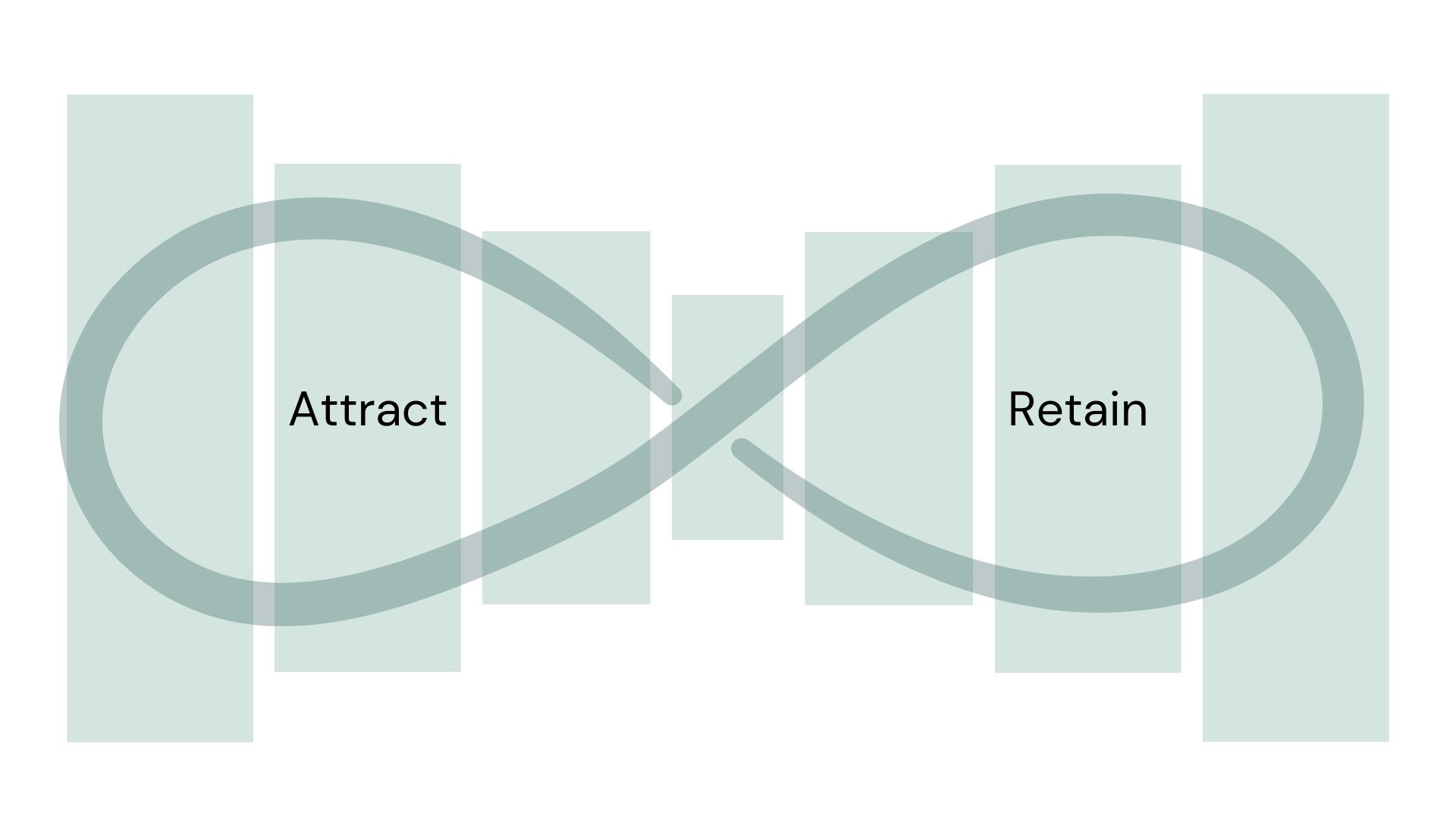
In practical terms, alignment work usually follows a predictable arc. First, you identify where leaders are currently misaligned and where incentives are pushing the wrong behavior. Then you connect KPIs to the actual customer journey, not internal org charts. From there, you get explicit sign-off from leadership and train them on why these KPIs matter and how to interpret them.
One of the most common examples of bad goal design is lead-based goals in Marketing. If Marketing is measured on lead volume alone, behavior follows the metric. Pipeline quality becomes optional.
Shifting the focus toward pipeline creation (or at least pipeline influence) changes how teams prioritize campaigns, channels, and targeting almost overnight. They finally look down the funnel and worry less about cramming as many leads as possible into the funnel.
This is less about control and more about clarity. People generally want to do the right thing; they just follow what the reward in front of them first.
If you adopt a Bow-Tie framework, your KPIs should mark meaningful transitions in the customer lifecycle—not every click, task, or field update.
At a high level, those moments often look something like this:
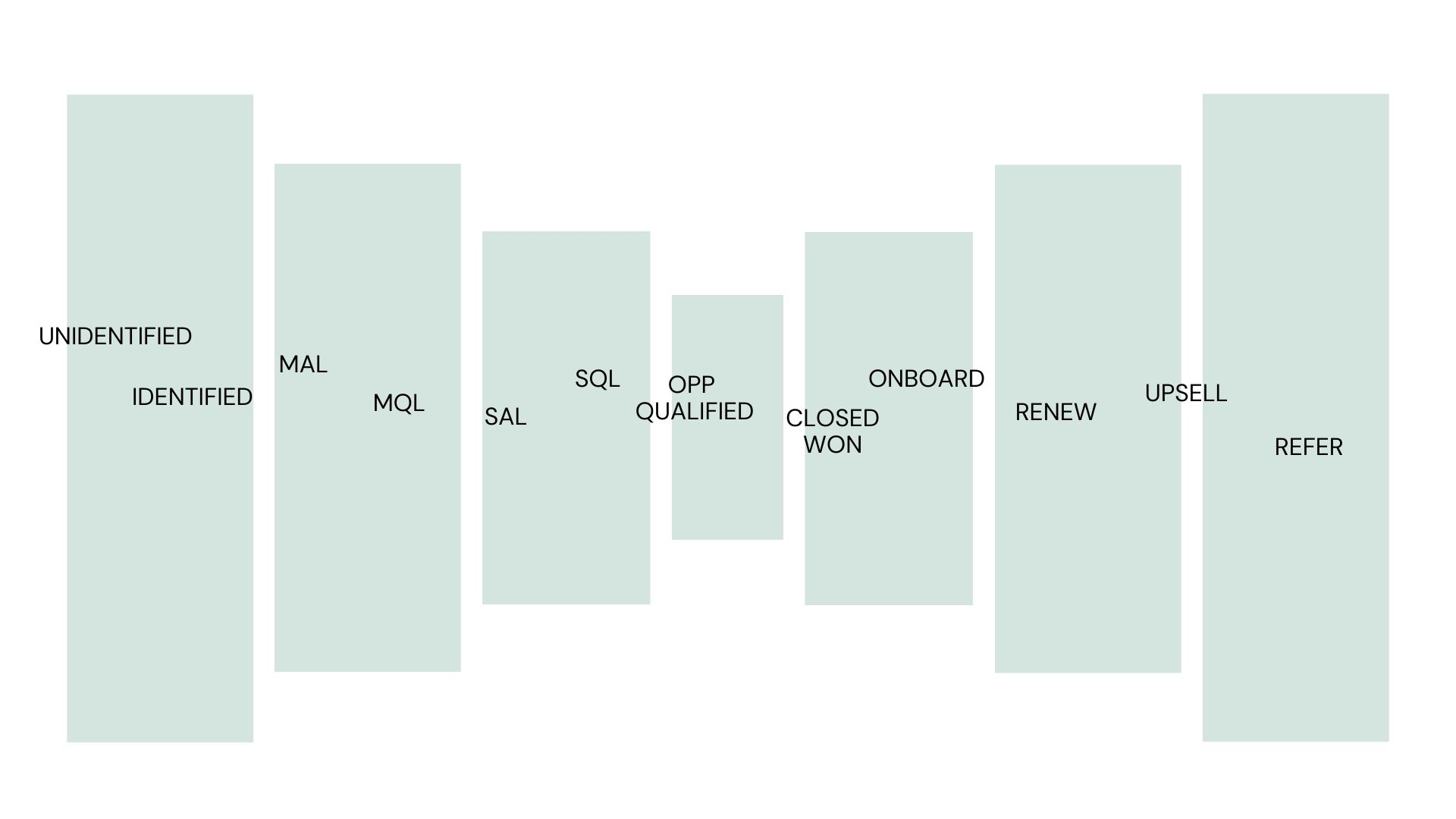
These stages align cleanly to the Bow-Tie: demand creation on the left, revenue and retention on the right. When you overlay team ownership, something important happens. Gaps become visible. You can see where Marketing hands off to Sales, where Sales disengages too early, or where Customer Success is measured on sentiment instead of outcomes.
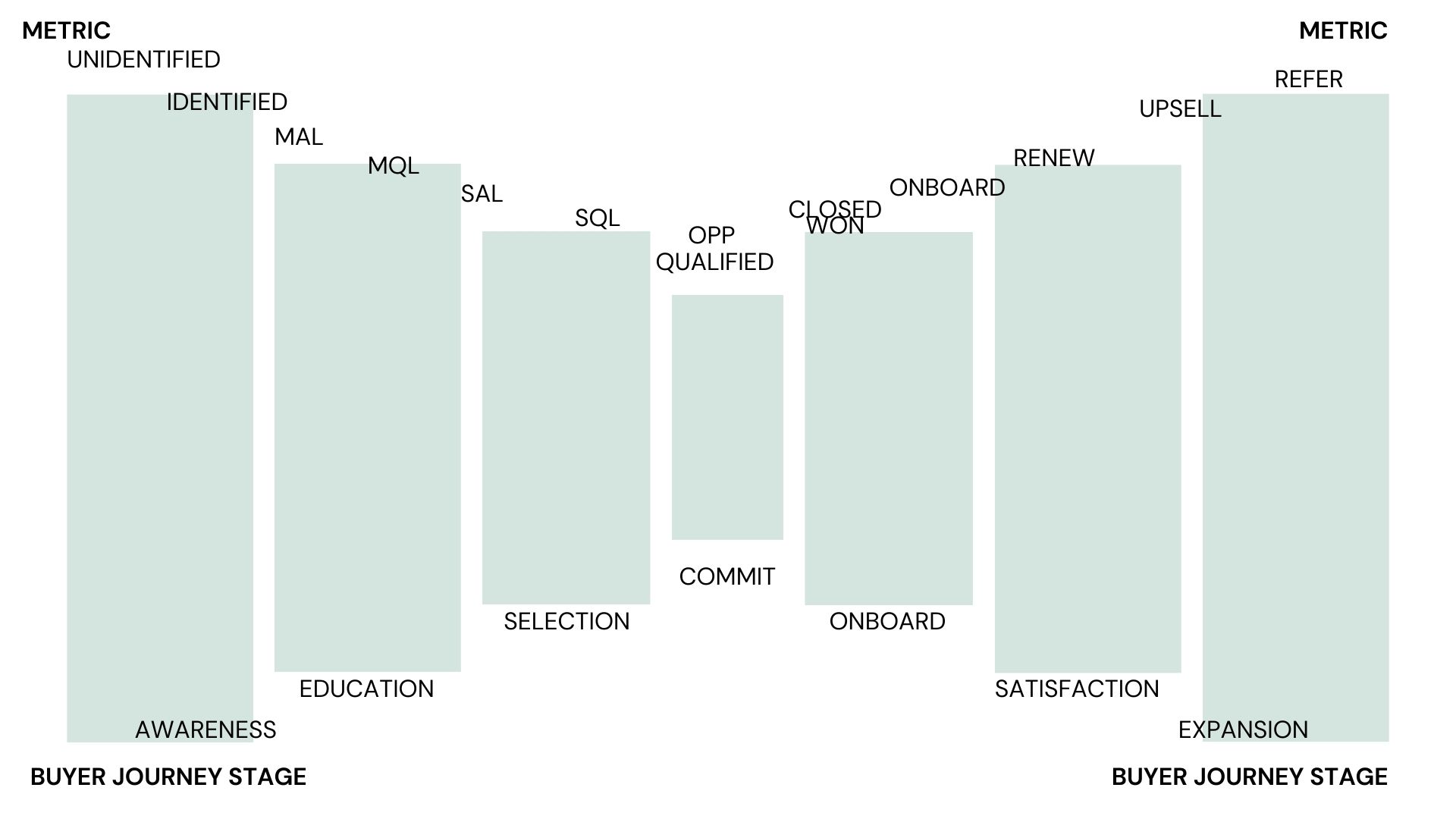
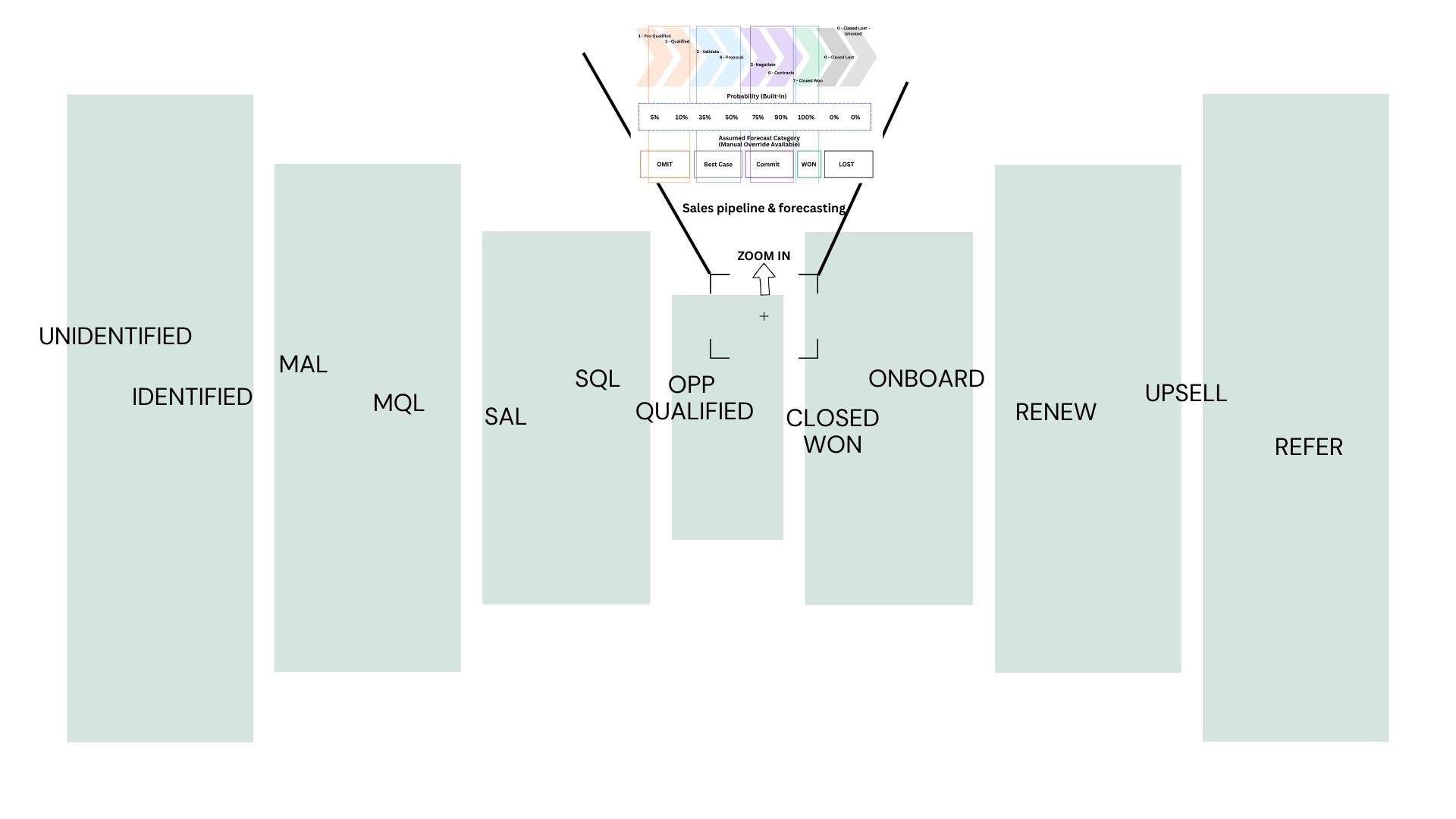
As companies mature, RevOps adds depth—not noise. Time-in-stage and conversion rates between these milestones become critical for operators, even if executives only review them when something looks wrong. Trend lines across teams or segments often reveal enablement opportunities, process friction, or territory imbalance long before revenue misses a target.
One important reminder for early-career RevOps professionals: KPIs are not an exhaustive list of everything a team measures. They’re the headline moments in the journey—the ones leadership uses to understand health, momentum, and risk.
It’s tempting to think these models only apply to SaaS. They don’t.
Whether you’re in manufacturing, professional services, or B2B SaaS, the fundamentals are remarkably consistent. You’re selling a product or service to a defined ideal customer. There’s a buying motion—sometimes complex, sometimes indirect. And there’s a post-sale experience that determines whether that customer stays, expands, or quietly churns.
The labels may change. You might add layers for distributors, resellers, or implementation partners. But the lifecycle itself doesn’t disappear.
The goal of KPI alignment isn’t to force every business into a SaaS-shaped box. It’s to capture the core moments that determine whether customers are successfully acquired, retained, and grown. When RevOps gets that right, teams stop arguing about whose numbers are “real” and start using metrics to make better decisions together.
And that’s when KPIs stop being a reporting exercise—and start becoming a strategic asset.


