This article is for operations leaders weighing whether to build a centralized RevOps function and for companies just starting to invest in operations who want to get the structure right from the beginning.
Fair warning: this topic generates strong opinions and ours isn’t the only one out there. Anyone who's worked in operations has developed a very specific view on how the org should be structured and where they should sit. We're no different (#IYKYK), but we'll try to keep it practical.
The difference between revenue operations and sales operations isn't just semantic.
Revenue operations, as Natalie Furness defines it, is "the business function dedicated to aligning people, processes, and data systems across go-to-market teams to maximize revenue generation while minimizing costs effectively."
In plain terms: instead of siloed ops teams sitting under each department head, a single RevOps leader oversees a team with specialized roles. They're responsible for ensuring data flows cleanly across every system GTM teams rely on (CRM, marketing automation, customer success platforms) so that every department leader is working from the same numbers. They own the handoffs between teams so things don't fall through the cracks. Enablement typically falls here too, covering systems and process knowledge across every GTM role.
When RevOps spans every GTM team rather than one or two teams, the difference shows. When a sales rep closes a deal and hands it to CS, someone has to make sure the right information travels with it. When marketing passes a lead to sales, someone has to define what "qualified" actually means and build the system that enforces it. RevOps owns that connective tissue.
For an example of how we’ve seen highly effective RevOps teams structured, check out this article.
Sales operations has a narrower mandate. It's focused on ensuring systems, processes, and people are configured for peak sales efficiency and performance. The systems work centers on the CRM and adjacent tools (not marketing automation, not CS platforms). Analysis stays within sales performance. Process ownership stops at the handoff.
That's not a criticism of sales ops. It's just what the function is designed to do.
The practical difference: a sales ops team can reasonably hand off a problem the moment it crosses into CS territory. A RevOps team owns what happens on both sides of that line, and is accountable for what happens in between.
For a concise breakdown of Sales Ops roles and how they would be organized into a RevOps organization, check out this article.
That distinction plays out constantly. Sales wants to close deals quickly. CS is held accountable for the quality of those deals and the information they receive at handoff. Without someone owning the full arc, that tension doesn't get resolved. It just gets escalated to whoever has the most political capital at the moment. 🙃
Revenue operations exists so that's not the default operating mode.
In practice, the case for centralized RevOps is clear. A single decision-maker, aligned systems, and a team that understands the full GTM picture leads to better prioritization and fewer gaps.
But real organizations are messier than org charts suggest.
In large enterprises, the argument against centralized RevOps often comes down to scale. When departments are heavily siloed, time zones create genuine coverage issues, or IT has taken over systems ownership, a single RevOps leader overseeing everything becomes genuinely unworkable.
The workaround many of these organizations land on — RevOps "tiger teams" that meet periodically to align on cross-functional process and reporting — is better than nothing, but it's a coordination mechanism, not an operating model. We've seen it, and it's... fine. Not great.
There are also structural realities that make silos harder to avoid:
Beyond structure, the reasons ops stays siloed are usually more political than operational: an executive who had a bad RevOps experience somewhere else, a department head who believes dedicated ops support serves their team better, or a RevOps leader who's not comfortable owning functions outside their own background.
That last one is worth naming honestly. RevOps leaders don't have to be experts in every function they oversee. That's what hiring specialized talent is for.
Here's where we have feelings. 😤
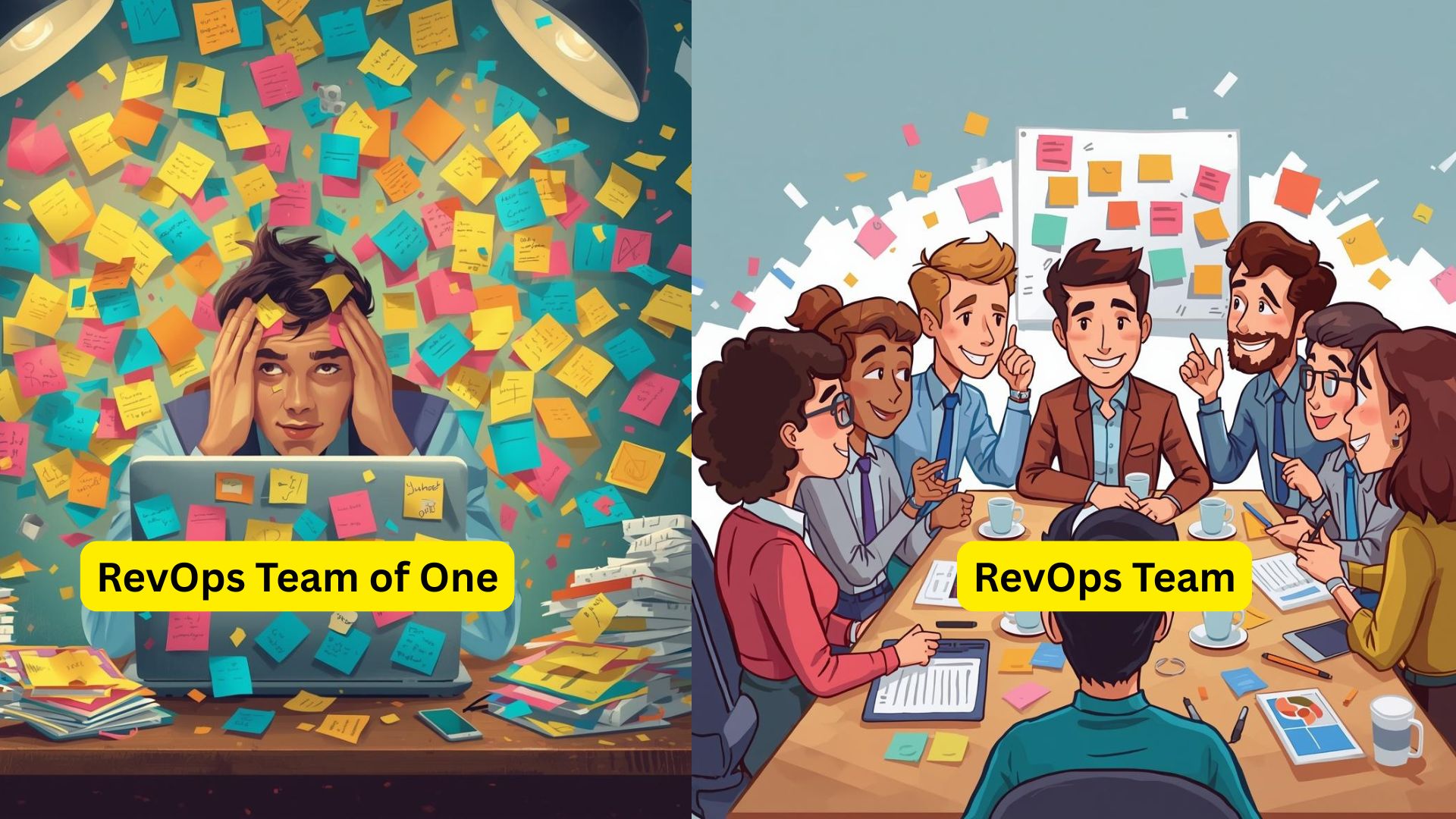
At early-stage companies, executives often hire a single "Revenue Operations Manager" and consider it handled. We understand the impulse. Startups need to run lean, and the RevOps label sounds comprehensive. But one person cannot practically own every GTM system, maintain data integrity, run analysis, support enablement, and keep pace with a growing business. Something will break.
Two outcomes tend to follow:
The first: you find a generalist who says yes to everything. They're talented, they stretch themselves, and they hit a wall when the business outgrows them. They ask for headcount. It gets denied. They ask again. It gets denied again. Eventually they leave, and you discover you need three people to replace them.
The second: the person you hired did their best, but without deep experience across systems, they made foundational data decisions that are difficult and expensive to unwind. Fields were mapped incorrectly. Lifecycle stages were never properly defined. Reports were built on assumptions that don't hold up. Now you're bringing in consultants to fix systems that were misconfigured from day one — while the business is trying to scale on top of them.
Neither of these is the person's fault. It's a staffing model problem.
The more effective approach for early-stage companies is a talented fractional RevOps operator who can coordinate consultants, advise on systems architecture, and tell you when it's time to hire in-house. The right person will build your foundation to scale, not just to survive the next quarter.
One practical signal worth flagging: if you see a job posting for "Revenue Operations Manager" and the description admits it's the company's first operations hire at 200+ employees — with a five-page list of responsibilities — be very careful. That's not a RevOps role. That's an entire ops department compressed into a single salary. Unless they already have job listings for additional roles, our honest advice is to think twice before saying yes.
The job market is tough and not everyone can afford to be picky. Just know what you're walking into, set your boundaries early, and don't let the scope creep quietly.
If you're an operations leader being asked to absorb more teams, the right question isn't whether it's comfortable. It's whether it's the right thing for the business. If you have gaps in your team's expertise, hire to fill them. You don't have to know everything about every function you oversee. That's what specialized talent is for.
That said, if politics are against a consolidated department, we get it. So often, it's simply not worth the fight.
If you're a leadership team building your first ops function, your first hire will shape your operational foundation for years. Bad data decisions made early are expensive to fix later. Listen when your ops team asks for more resources. And when a strong operator walks out the door, understand that the work doesn't leave with them — it just becomes three people's problem instead of one.
Operations done well isn't a cost center. It's how your executives and investors get the information they need to make decisions that actually hold up. 📊