Podcast

October 9, 2026
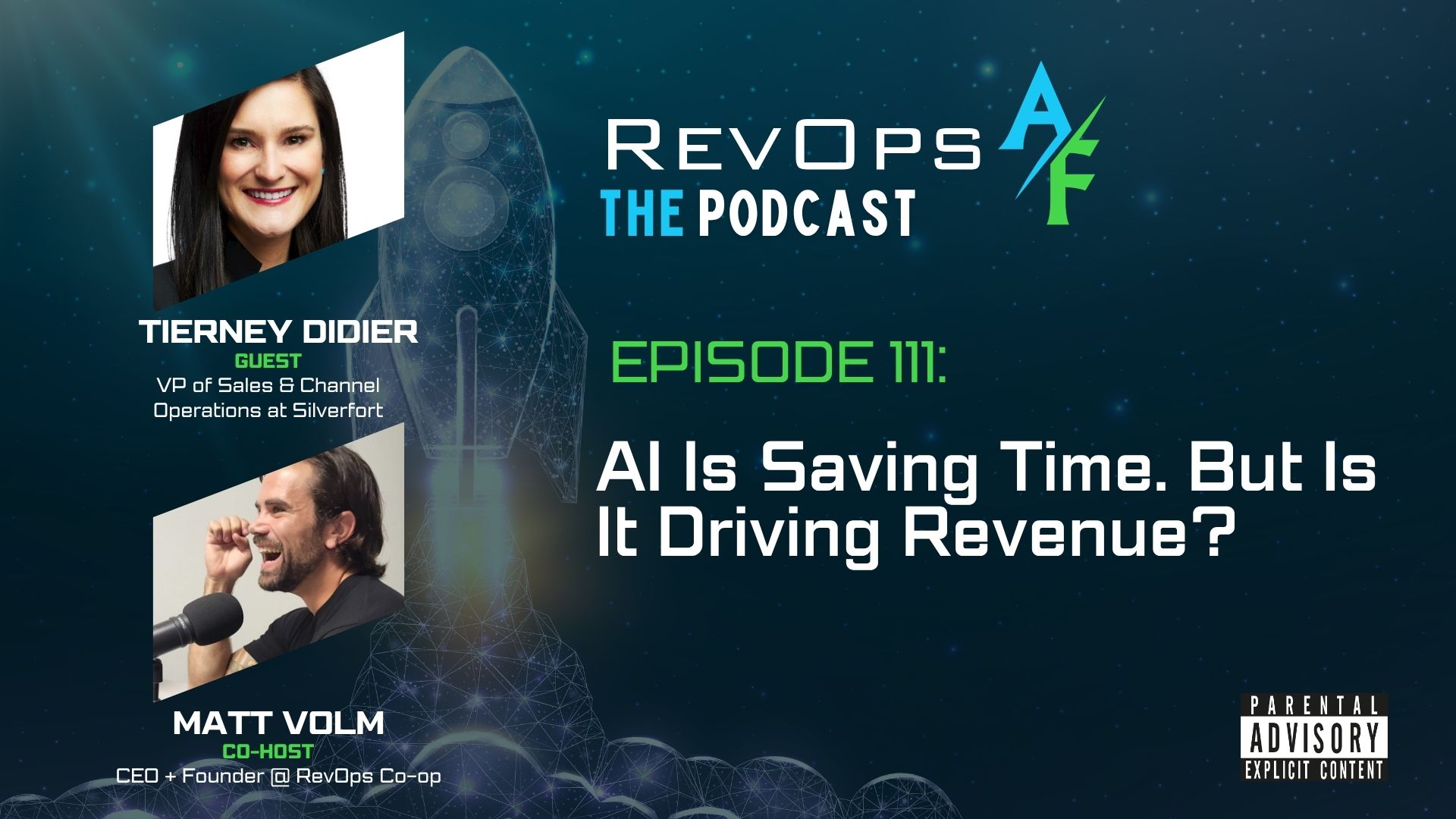
Episode 111: AI Is Saving Time. But Is It Driving Revenue?
AI is saving time in RevOps — but is it driving revenue? Tierney Didier of Silverfort breaks down what's actually working and what's still TBD.


The question haunts RevOps professionals everywhere: "Should we just blow up our CRM and start fresh?" It's a conversation that Alex Biale, co-founder of Domestique, hears constantly from prospective clients.
In this episode of RevOpsAF, Camela Thompson and Alex dive deep into the psychology behind CRM migration decisions and reveal why most companies are asking the wrong question entirely.
Alex's experience at Domestique has shown him a troubling pattern: companies come to them convinced they need a new CRM, but when pressed for specifics, the reasons often boil down to "we're just tired of this one" or "we think moving from HubSpot to Salesforce will solve all our problems." This mirrors what many RevOps professionals see in their own organizations—executives believing that new technology will magically fix underlying process issues.
The fundamental issue, as Alex explains, is that teams are approaching the problem backwards.
"A tool is just that, it's a tool. It's not the end all, be all." — Alex Biale
Too often, he hears statements like "this process is done this way because that's how Salesforce is set up" or "we do it this way because that's how HubSpot is configured." This thinking puts the cart before the horse, allowing technology to dictate business processes rather than the other way around.
Domestique's approach follows a clear hierarchy: strategy, process, technology, data, enablement—in that exact order. This framework challenges the common tendency to jump straight to technology solutions without addressing the foundational elements that make technology effective.
Before considering any CRM migration, Alex recommends asking fundamental strategy questions:
These aren't just theoretical exercises. Alex shares that when they push clients through this questioning process, "nine times out of 10" the real reasons for wanting to switch become clear—and they're rarely about the technology itself.
Once strategy is clear, the focus shifts to process design. How will the organization execute against its strategy? What workflows need to be in place? Only after these processes are defined should teams consider which technology stack best supports their execution.
This approach directly addresses one of the most common issues Camela observes: poor data hygiene and lack of processes.
"You're going to have to deal with that even if you move to a new CRM because you're just going to be porting garbage over to that system and end up in the same exact state." — Camela Thompson
The conversation reveals a critical challenge in the RevOps consulting space. Many consultants, eager to close deals, immediately say yes to migration requests without asking the hard questions. Alex admits that Domestique probably loses deals because of their approach, but he argues this short-term thinking is ultimately counterproductive.
"If you are the consultant that is primarily responsible for the strategic and technical implementation of a new tool, if it doesn't end up solving the thing, whatever the thing is, that's going to come back to bite you.” — Alex Biale
The key questions consultants should ask include:
Often, clients have sophisticated ideas about their desired end state but lack understanding of how to get there. A skilled RevOps professional can bridge this gap, potentially solving the problem within the existing system rather than requiring a costly migration.
Alex offers a candid perspective on why executives often push for new tools.
"A new C-suite executive will come in... they will be used to a tech stack... they can buy themselves 12 to 18 months of runway within their company of just quote unquote, just procuring a new tool." — Alex Biale
This observation highlights a concerning trend where tool selection becomes a way for new executives to demonstrate activity and buy time while they figure out how to make a real impact. The problem is that after the migration is complete, the fundamental question remains: what business outcome are you driving?
For in-house RevOps professionals, the conversation provides valuable guidance on how to challenge these decisions. Alex's advice centers on confidence and communication:
Rather than complaining at the water cooler, Alex recommends going directly to senior leadership. As an example: "I'm seeing a glaring problem that we’re not solving for. Can you make 15 minutes for me by the end of the week?"
This approach works because it demonstrates three critical qualities:
A crucial insight from the discussion is how RevOps professionals should communicate with executives. The natural tendency is to show all the work—the analysis, validation steps, and detailed reasoning. But executives want the punchline first.
"They just want the answer. They want the punchline. And then if they want to go deeper, then you can go deeper." — Alex Biale
This means leading with the business impact and recommendation, then providing supporting details only when requested.
Camela introduces Aristotle's framework for negotiation, which provides a structured approach to these conversations:
This framework helps RevOps professionals move beyond just having good ideas to actually influencing decisions.
The discussion isn't entirely anti-migration. There are legitimate reasons to consider a new CRM:
The key is ensuring these reasons are strategic rather than tactical, and that the migration addresses root causes rather than symptoms.
Both Alex and Camela emphasize the importance of building long-term relationships over short-term revenue. Alex shares examples of clients who have followed him through multiple companies, and Camela measures her success by client retention and referrals.
This approach requires the confidence to sometimes say no to immediate revenue in favor of doing what's right for the client.
"Look, I want to enable you guys to do the right things. If that's not interesting to you, that's okay. I'd love to refer you to some of our other partners in the industry." — Alex Biale
This conversation reflects broader challenges in the RevOps field. As the discipline matures, professionals need to move beyond being order-takers to becoming strategic advisors. This requires not just technical skills but also business acumen, communication abilities, and the confidence to challenge conventional thinking.
The CRM migration question is really a proxy for a more fundamental issue: how do we ensure that technology serves business strategy rather than driving it? By following the strategy-process-technology framework and building the skills to influence decision-making, RevOps professionals can help their organizations make better choices and achieve better outcomes.
As Alex concludes: "Lead with empathy, curiosity, and confidence." When RevOps professionals combine deep technical knowledge with strategic thinking and strong communication skills, they become invaluable partners in driving business success—regardless of which CRM they're using.
The next time someone asks whether they should "blow up their CRM," remember Alex's advice: start by asking why, dig into strategy and process, and only then consider whether technology changes are actually needed. More often than not, the answer lies in better execution of existing capabilities rather than wholesale system replacement.
Check out our blog, join our community and subscribe to our YouTube Channel for more insights.