As long as I can remember, I’ve been volun-told I own the board deck for go-to-market. If you've ever presented anything along these lines to an executive audience, you’ve lived the scenario.
You present a number.
An executive who's spent twenty years pattern-matching slides frowns at it and says it doesn't match what they saw from another team that morning.
The room goes quiet.
And you, the person who built the report, get to spend the next two days figuring out why the discrepancy happened.
The culprit is almost always boring. A filter that didn't get applied. A date range that's off by a day. The problem was some piece of background logic the ops team baked in years ago that nobody else knew existed.
But by the time you find it, the damage is done.
Trust in the data has cracked, the tension between teams that was already simmering finally has a reason to boil over, and you're rebuilding credibility one corrected slide at a time.
I’m tired of people screaming that if you haven’t connected your LLM of choice to your CRM that you’re already light years behind. But I’m not flinching because I’m scared of the technology. I’m cautiously moving forward because I’ve lived the data discrepancy nightmare at human speed, and I can do the math on what it looks like at AI speed.
Here's the bind every revenue operations leader is in right now. Your sales team has seen the demos. Your CEO read the same LinkedIn posts you did.
Everyone wants the productivity, and they wanted it last quarter.
Say no and you're the bottleneck standing between the company and the future.
Say yes too fast and you own the cleanup.
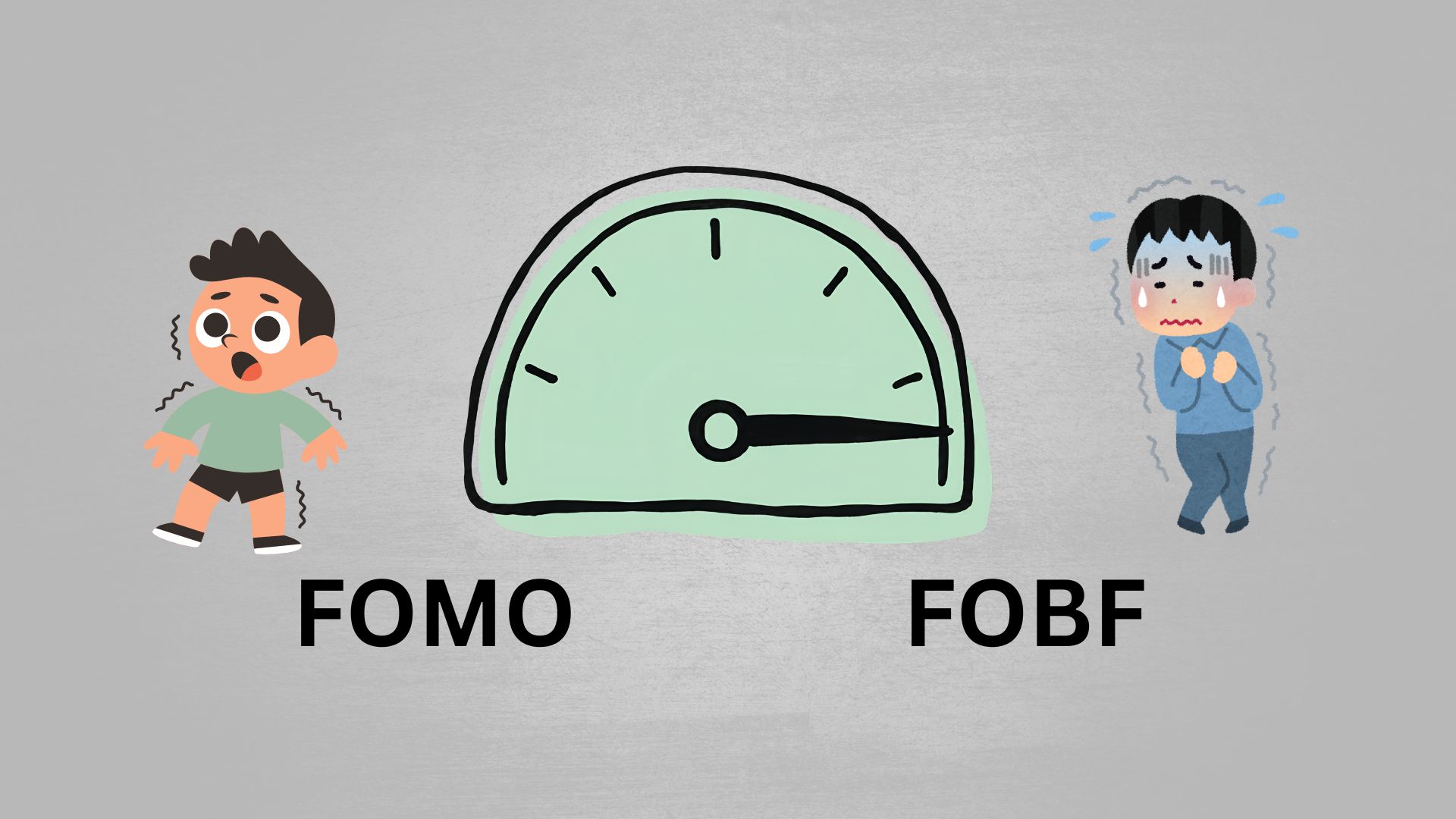
So you sit with two competing fears. Call them FOMO and FOBF: fear of missing out and fear of being fired. FOMO says everyone else is sprinting ahead and you're getting lapped. FOBF says you're one bad prompt away from an irreversible mess with your name on it. Both are rational. Both are pointing at something real.
The honest answer lives in the middle, which is the least satisfying place to land and also where the truth usually is.
Lock everything down and you'll throttle legitimate productivity. Open the floodgates and you'll build years of technical debt you'll be untangling long after the hype cycle has moved on to whatever's next.
Anybody telling you the choice is obvious is selling something.
Sandy Robinson, VP of RevOps and GTM Enablement at Quavo Fraud and Disputes, said this better than I've heard anyone say it. In her keynote at RevOpsAF London, she put the quiet part on a slide:
"You think you are scaling productivity. You are scaling inconsistency." – Sandy Robinson
That line's been stuck in my head ever since because she's right.
Her AI Paradox is brutal and accurate. The anticipation of productivity soars when every team adopts AI. Consistency tanks as every user’s prompt tells a slightly different story. Trust erodes and leaders stop believing the numbers.
And governance? Governance never shows up to the party at all.
The faster the AI gets, the more your operating system matters. Not less.
Her one-liner is the whole argument:
"AI cannot create consistency where consistency doesn't already exist." – Sandy Robinson
Your LLM isn't going to quietly reconcile the three competing definitions of a qualified lead you've got floating around. It's going to confidently report all three, to three different people, in the same afternoon, and sound great doing it.
Here's the part nobody wants to say into a conference mic. The number one reason CRM-to-LLM connections blow up isn't a bad LLM model. It's the data underneath it.
And before you get defensive, I'm not pointing at your CRM. I'm pointing at everyone's, mine included.
You've heard the story circulating on LinkedIn by now. Somebody built a gorgeous board deck in an LLM tool. It looked polished, authoritative, done. Then they presented it and found out every single number was wrong. The post went viral because we all felt the secondhand panic in our chests.
I felt something sharper than panic.
I felt seen.
I've made reporting errors, small ones and a couple of genuinely large ones… the kind that trail you around for a quarter. I've spent weeks as the human referee between two executives pulling their own numbers, not to find the truth, but to catch the other one being wrong. (That's not a data problem. That's a people problem wearing a data costume. But guess whose desk it lands on anyway?)
Bad data was costing me sleep and credibility long before AI was anywhere near the room.
Now hand that same broken data to a model that fills every gap with a confident guess.
With AI, bad data doesn’t get you an error message. You get a wrong answer in a complete, grammatically flawless sentence.
This is why the data problem is universal, and why it's worth naming out loud without shame. Sandy ran a poll asking what the biggest risk of scaling AI in revenue teams is. Bad data at scale won by a landslide at 63 percent. Lack of governance limped in second at 27. The practitioners already know. The risk was never the robot. It's the three flavors of broken data we keep feeding it:
Feed that into AI at scale and you don't get insight. You get confusion, scaled faster.
If you're going to connect, know what you're actually connecting to, because the platforms aren't equally ready and pretending otherwise will hurt you.
Salesforce has built the more graceful path, with one enormous asterisk. Anthropic is the first LLM provider running fully inside Salesforce's trust boundary, with Claude's traffic contained in the Salesforce virtual private cloud and Agentforce acting as the governed execution layer. That's a genuine architectural advantage.
Here's the asterisk: it only works if your RevOps team has already done the boring work first. Defined the core metrics. Documented the validation rules. Set guardrails so users don't get blindsided by blocked entries they never saw coming.
Even the vendor setup guides tell you to start read-only and clean your data before you flip on agents. The technology's ready. The open question is whether you are.
HubSpot is earlier in the story, and you should walk in with your eyes open. The remote connector for Claude hit general availability in 2026, but as of this writing it still can't read custom objects, and custom objects are exactly how most mature teams actually model their business.
The part that should worry anyone who owns data integrity: the connector inherits the signed-in user's permissions, but it'll happily bypass the validation and automation guardrails your UI enforces.
RevOps folks in HubSpot's own community forum have already documented it, describing a deal that got moved in a way the interface would have blocked, because the connector strolled right around the restriction the team had put in place. Admins have barely any central control over it.
And if you've got sensitive data protections turned on, the connector loses access to engagement history, which may or may not matter for what you're trying to do.
Regardless of your tech stack, connect an LLM straight to a CRM that isn't ready, and you multiply the number of people who can land on a different number, with nobody in the middle to catch and explain the gap.
Congratulations, you've automated my personal board-deck nightmare!
So what does the acceptable version of pushing back on your dozens of requests to integrate with "not yet" actually look like?
This is where I want to build directly on Sandy's work, because she handed us the right scaffold. Her framework is SAGE: Standardize, Architect, Govern, Evolve. It's the cleanest model for this problem, and I'm not going to pretend I cooked up something better. What I will do is add the modifications I've learned the hard and humbling way, plus one move I think the framework is missing.
Sandy’s model plus my one addition is SAGES.
S is for Standardize. Before AI scales execution, it has to scale standards. My addition: document the logic nobody can see. The dangerous standards aren't the ones written down in a playbook. They're the ones living rent-free in one operator's head, the background filters and date logic and silent assumptions that work beautifully right up until that person leaves or an LLM starts reading the field directly. If it isn't documented, it isn't a standard. It's a liability with good intentions.
A is for Architect. This is where data quality stops being a footnote and becomes the entire event. You can't architect your way around garbage inputs, so don't try. Map every source feeding your CRM and rate it honestly. Clean it. Normalize it. Then connect strategically, and connect read-only first. Read-only isn't timidity. It's the difference between an LLM that hands you a wrong answer and an LLM that writes that wrong answer back into your system of record, where it quietly breeds.
G is for Govern. Sandy calls governance the most overlooked AI capability in the enterprise, and her line deserves to be taped to every skeptic's monitor: "Governance is not the enemy of innovation. It's what makes innovation repeatable." In practice that's approved prompts, approved sources, real human review, and clear decision rights. Plus a rule that is a hill I'll die on: never trust LLM output at face value. Mass updates get tested like any other migration. Even a perfectly tuned prompt at a low temperature is wrong some percentage of the time. Plan for that percentage instead of pretending it's zero and acting shocked when it shows up.
E is for Evolve. The operating system has to learn faster than the market moves, and your people have to learn how to actually use it. This is the step everyone skips, because it isn't a tool you can buy, it's work. Enablement is the work. Sandy's right that the bowtie creates learning and AI accelerates it. (The bowtie itself comes from Jacco van der Kooij and the Winning by Design crew, and Sandy credits them, so I will too.) None of it compounds if your team has no idea how to leverage it.
And then the move I want to add.
S is for Sanction. I mean sanction in the permission sense: the organization deciding, as one body, what AI is and isn't allowed to do at scale. (Skip it, and you might eventually meet sanction in the other sense. Funny how that works.) This is your AI advisory committee, and it's not bureaucracy for bureaucracy's sake. It's the structure that forces your company to think before it acts, and it's the thing standing between you and an irreversible mistake. Best of all, it turns "not yet" from a lonely opinion you have to defend by yourself into an organizational decision the whole leadership team owns alongside you. If you're chasing SOC 2 or handling sensitive data, this one isn't optional. It's the adult in the room.
Notice what SAGES really is: a roadmap for earning the green light. "Not yet" is only a defensible answer if every one of those letters has active work behind it.
Refusal with no remediation is just fear with a better vocabulary. Refusal with a roadmap is strategy.
In case this is reading like a long argument for doing nothing, it isn't. There's real value on the table right now, and you don't have to bet your system of record to grab it.
Data normalization is the standout. The old way to clean a field like Industry was to query every value from every enrichment source, catalog the chaos, and hand-build a taxonomy over a few soul-crushing days. Letting an LLM suggest normalizations and do the pattern matching squashes that into something you can knock out this week.
The other safe entry point is an LLM sitting on top of your data warehouse, producing corrected views or staging tables your team reviews before anything fires, instead of writing straight back into your systems of record.
Same pattern both times: the AI proposes, a human reviews, and nothing irreversible happens in your systems of record. You don't have to pick between reckless and frozen.
If you're feeling the pressure to deploy AI right this second while your sales team begs for better tools, you're not alone. If you've got reservations, also not alone. And if you need more time to think it through, lean on your community and talk to other practitioners before you hit the gas. Moving deliberately is frustrating for everybody, especially the people waiting on you. It's also, when you're handling sensitive data, exactly the right call.
The time you invest now in sound data architecture is the thing that keeps the wheels on the moment you do green-light the connection. Not the fun answer. The true one.
Sandy closed her keynote with words I keep coming back to: "Build carefully. But build." That's the whole thing.
"Not yet" was never supposed to mean "never." It supposed to mean "not until the foundation can hold the weight," followed immediately by actually building the foundation.
So here's my question, and I want the arguments. Where are you on the FOMO-to-FOBF spectrum today, and what's the one piece of data architecture you wish you'd fixed before anyone said the word "AI" in a leadership meeting? Tell me. I've been on every point of that spectrum, usually in the same week.
And go listen to Sandy. Her keynote is the reason this article exists, and her podcast, AI-Powered RevOps, is one of the few places having this conversation with real nuance. Find it on Apple Podcasts, Spotify, and YouTube, or at AI-PoweredRevOps.com.